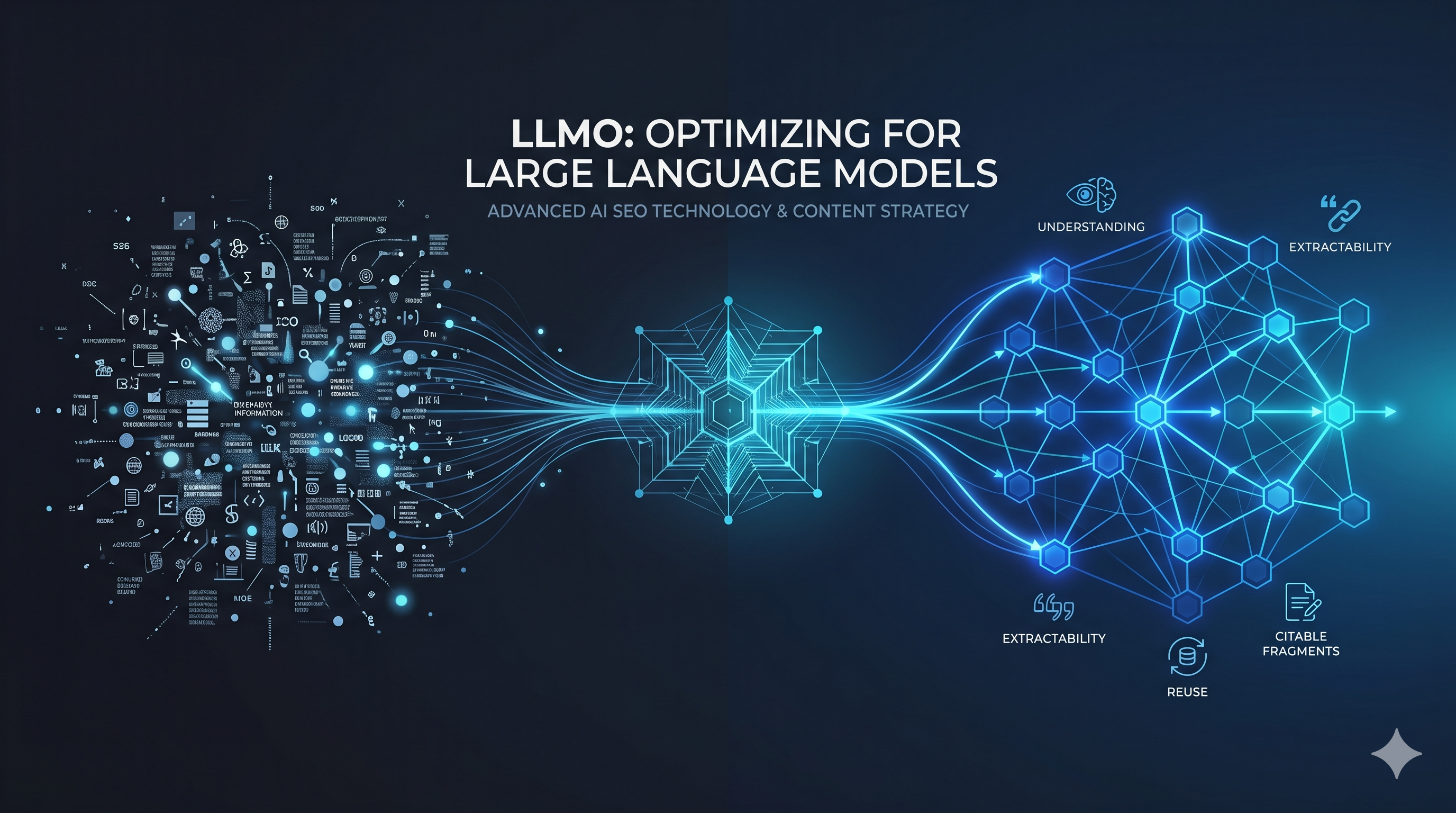
After SEO, Comes LLMO
While SEO aimed to please Google’s algorithm, LLMO (Large Language Model Optimization) aims to influence how models like GPT-4, Claude, or Gemini perceive and recommend your entity.
How an LLM “Learns” Your Existence
Models do not crawl the web in real-time like Googlebot (though this is changing with search plugins). They were trained on massive datasets. To influence these models, you must work on:
- Brand Sentiment: The more your brand is associated with positive and expert terms across the web, the more likely the LLM will recommend you.
- Citation Density: Being present on authority sites, niche forums, and knowledge bases (Wikipedia, Wikidata).
- Semantic Clarity: Using unambiguous language that the AI can easily transform into vectors (embeddings).
“In a conversational world, visibility no longer depends on a list of links, but on the statistical probability that your name is the best answer to a question.”
Concrete Strategies for LLMO
- Entity Optimization: Clearly define who you are via “Organization” and “Person” structured data tags.
- Narrative Control: Publish white papers and case studies using specific terminology you wish to “preempt.”
- Conversational FAQ: Write content in a “Prompt / Response” format to facilitate extraction by RAG (Retrieval-Augmented Generation) models.
Conclusion
LLMO is a long-term strategy. It is the art of building a digital reputation so solid that AI can no longer ignore your expertise when generating a response for a user.